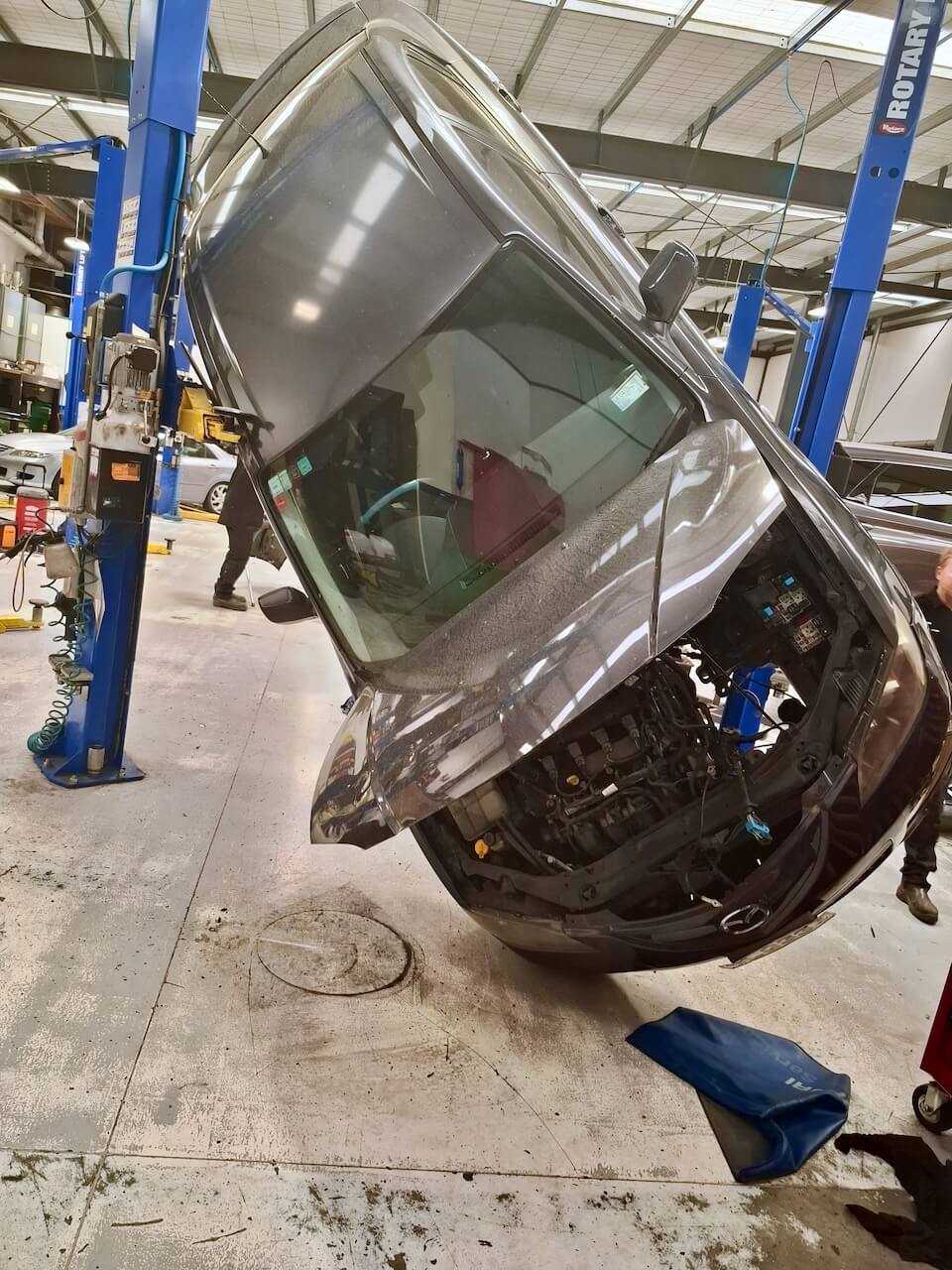
Instead of a transmission jack, the operator used a pipe to support the engine during transmission removal, letting the hoist down to lift the engine - too much and the car fell off, causing significant damage to both vehicle and hoist.
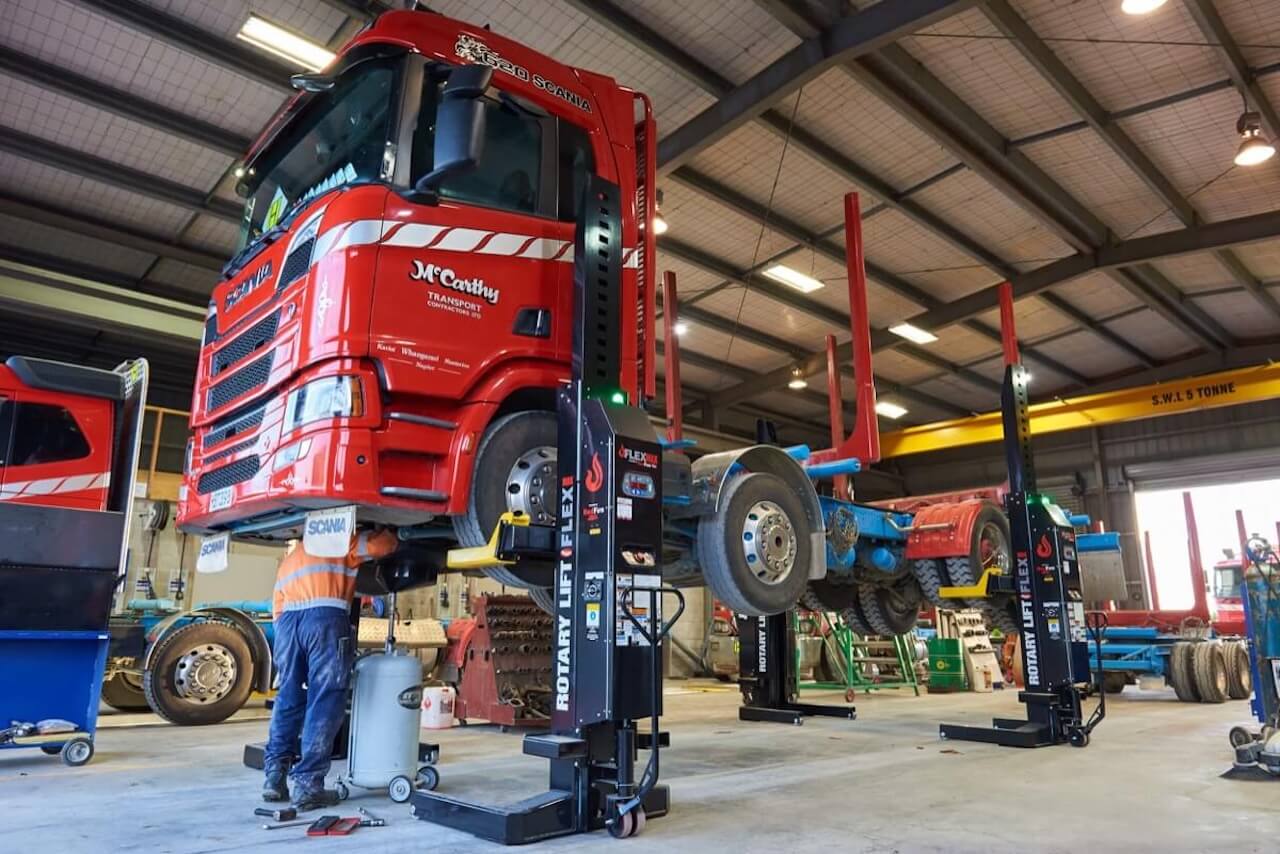
This heavy column lift set had an electronic fault that caused the truck to fall off.
A manufacturing defect let the magic smoke out of this high-current DC hoist. A proper isolator prevented bigger problems.
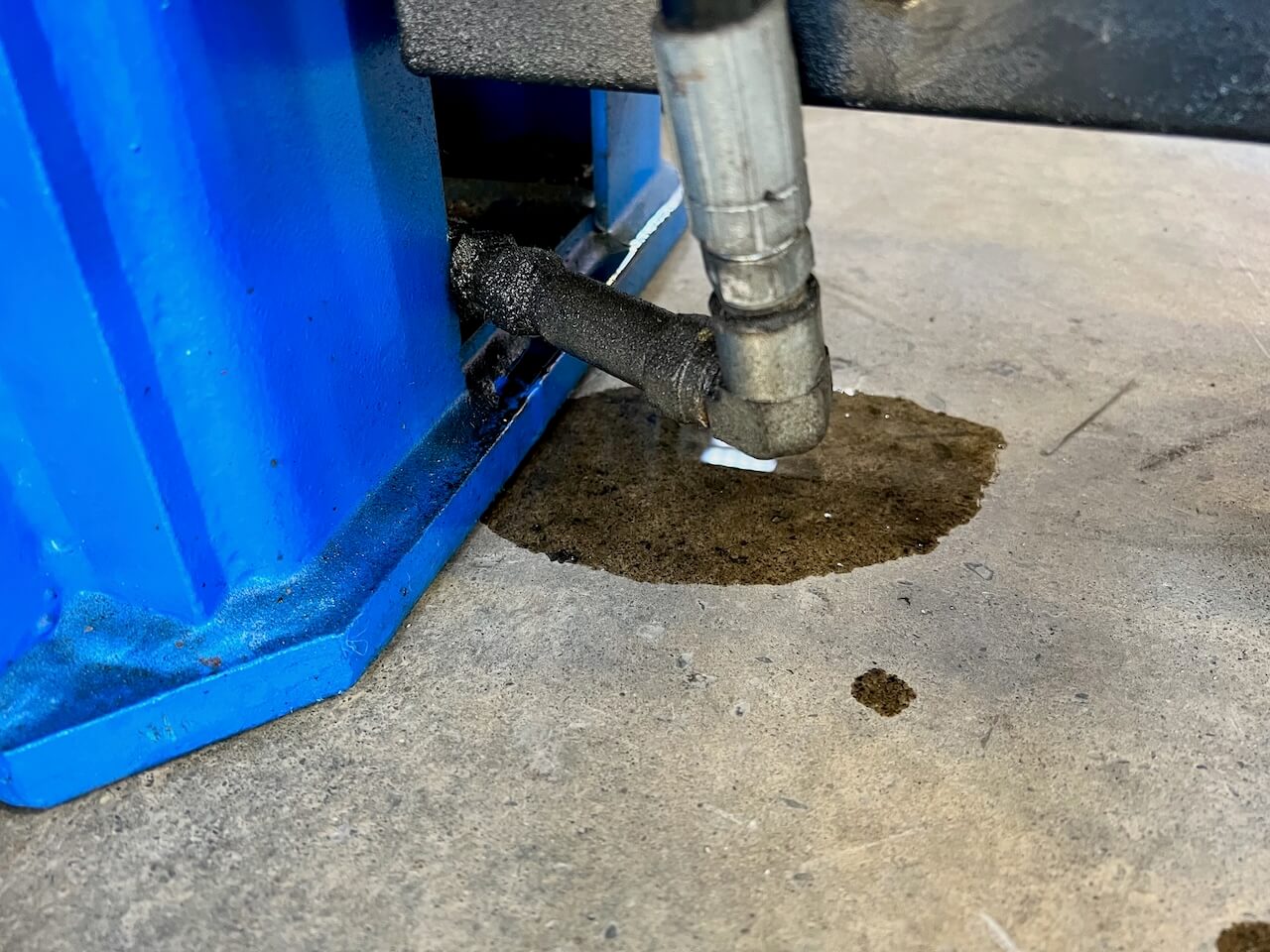
This incorrectly assembled hydraulic hose burst, dropping the hoist onto its safety locks and dumping a large amount of fluid into the interior of the vehicle through the open driver's window.
Structural crack in the HAZ (Heat Affected Zone) around the weld on a safety lock.
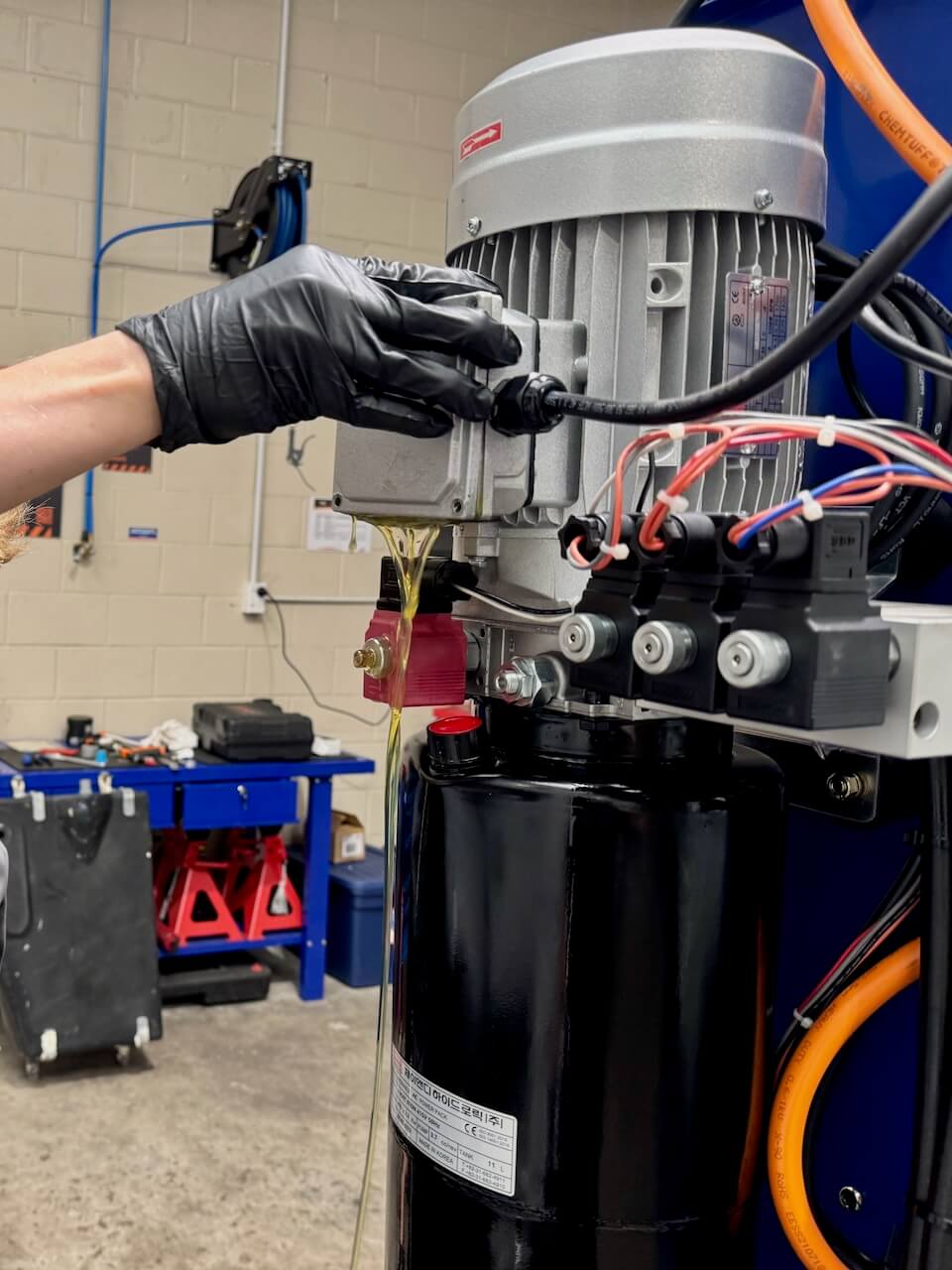
You should never see hydraulic oil leaking from the electrical termination box on your hoist's motor! The hydraulic pump's main shaft high-pressure seal ruptured, passing oil into the motor.
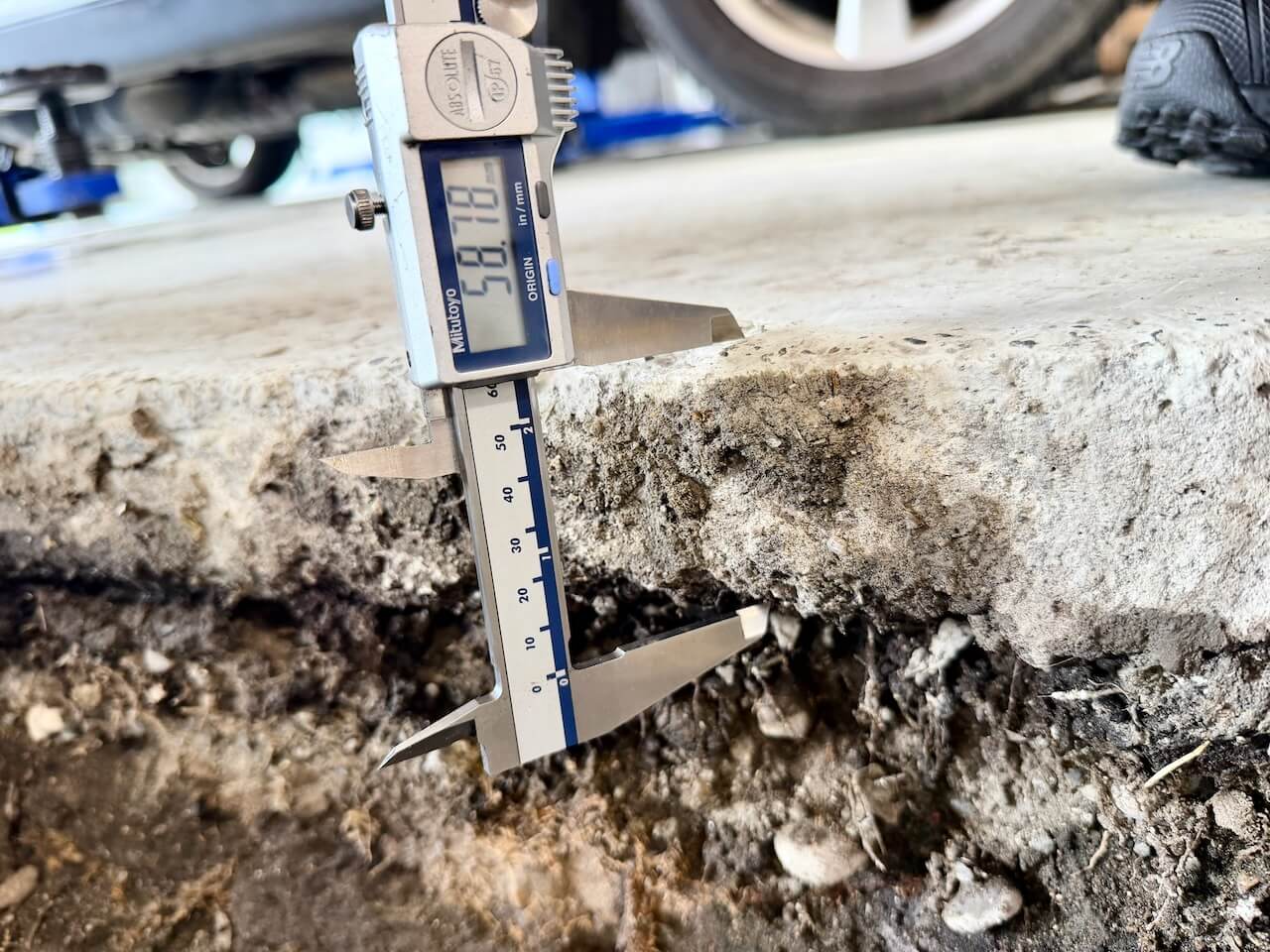
A nominal concrete thickness of 58mm is not sufficient to install a vehicle hoist – especially concrete of poor quality like this. The minimum is 160mm of good quality 20Mpa concrete, or as specified by the manufacturer.
The lift nuts on this two post hoist have collapsed, activating a mechanical safety lockout. The lockout was then bypassed, leaving the operator with no safety margin for when the safety nut thread also collapses.
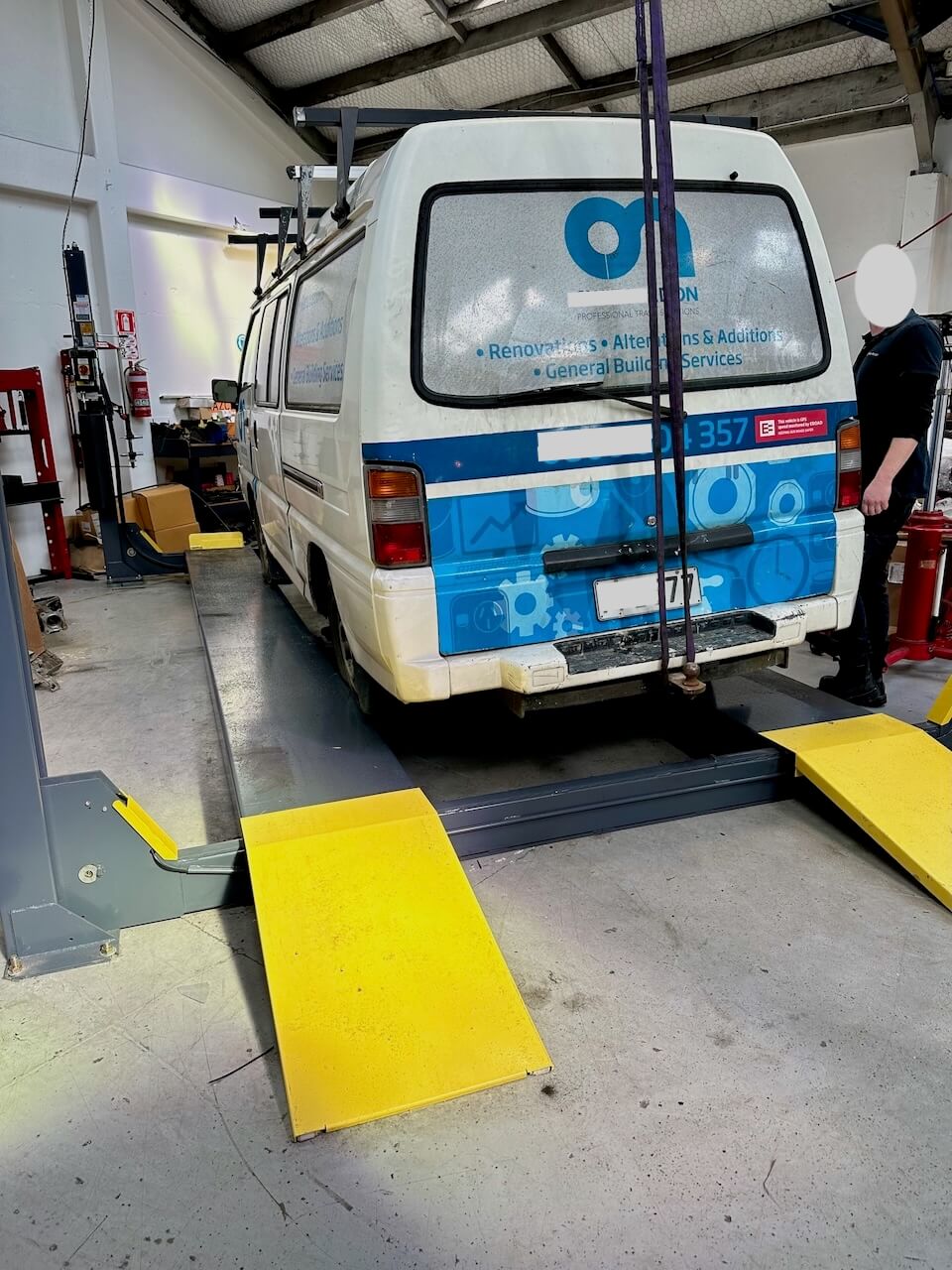
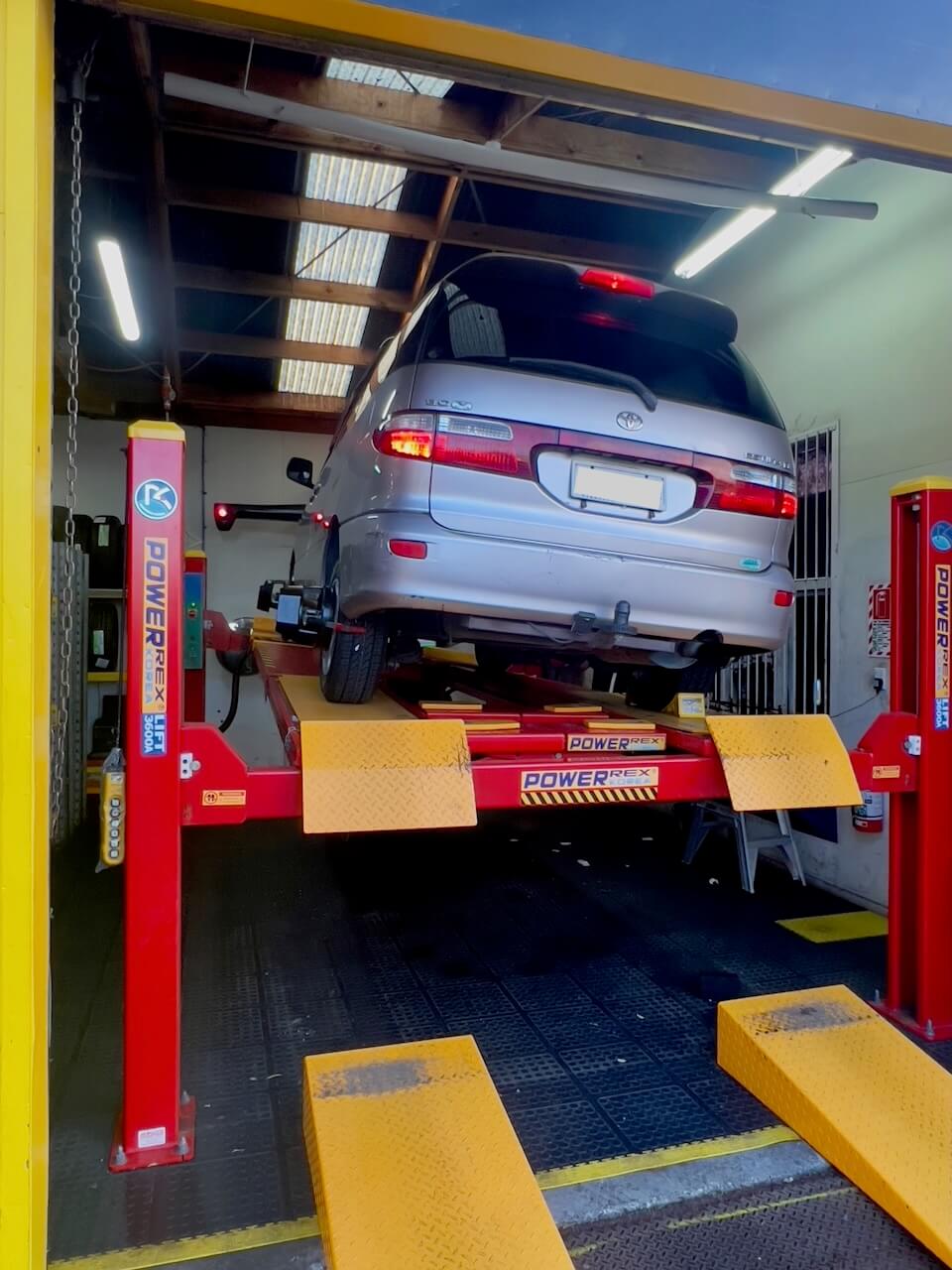
This van was a hair away from rolling after an apprentice attempted to load it onto a four post hoist without a spotter.
The electrical switch on this hoist had been replaced with an incorrect part, which caught fire.
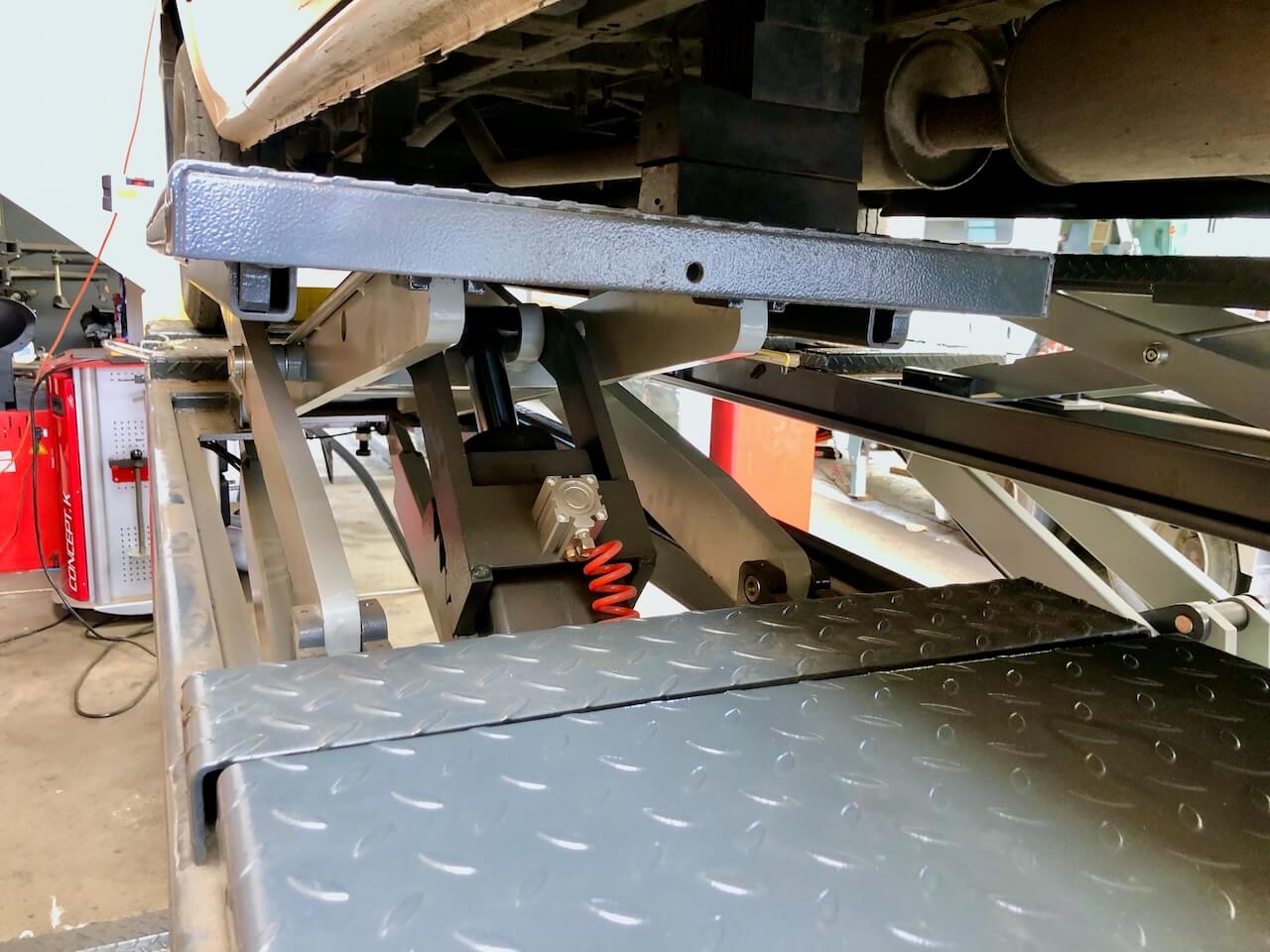
No, it's not lens distortion. The safety lock on this scissor hoist collapsed when the hoist was overloaded.
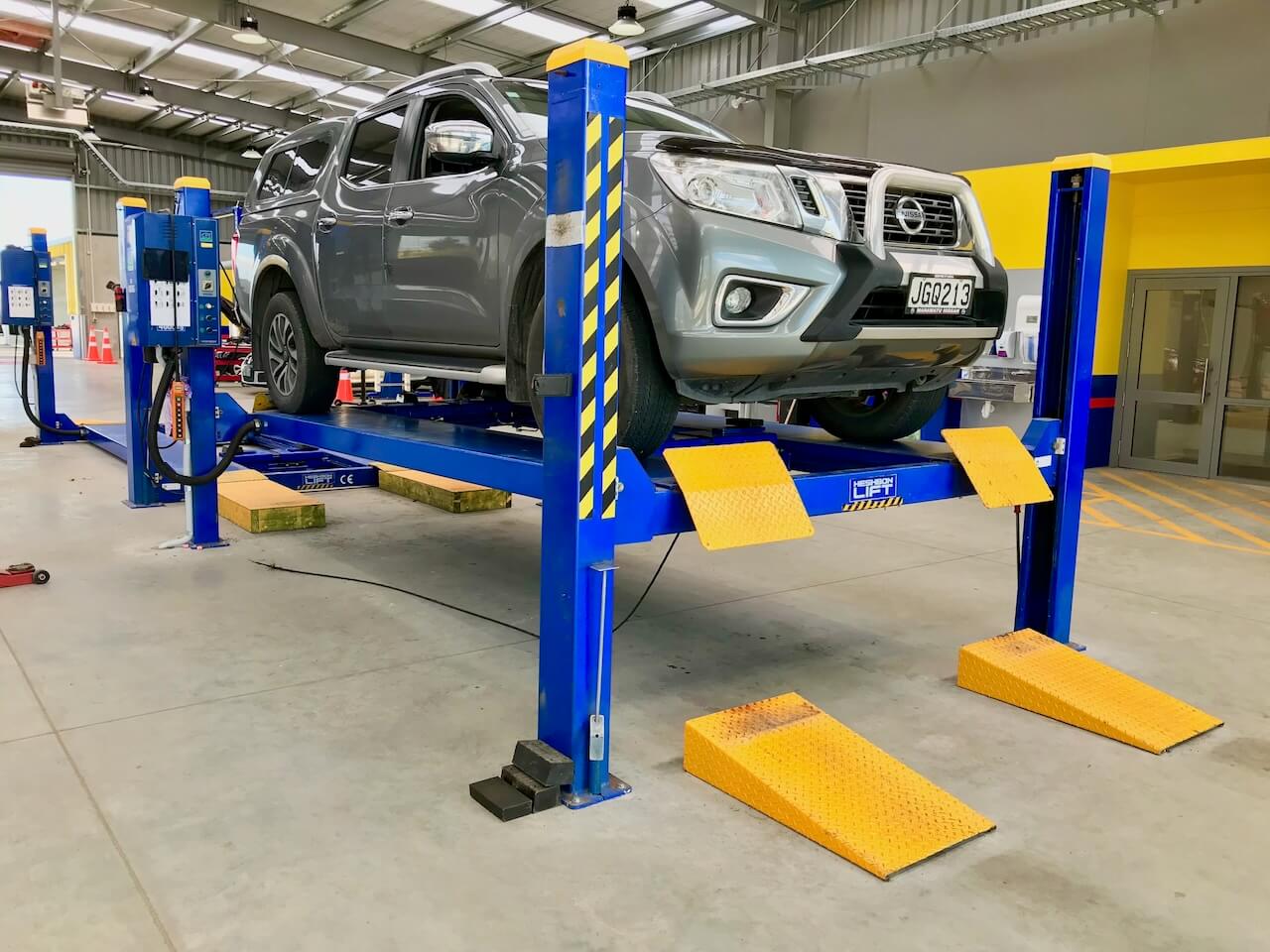
The operator attempted to load this small truck onto a large truck hoist with excessive platform width for the vehicle track.
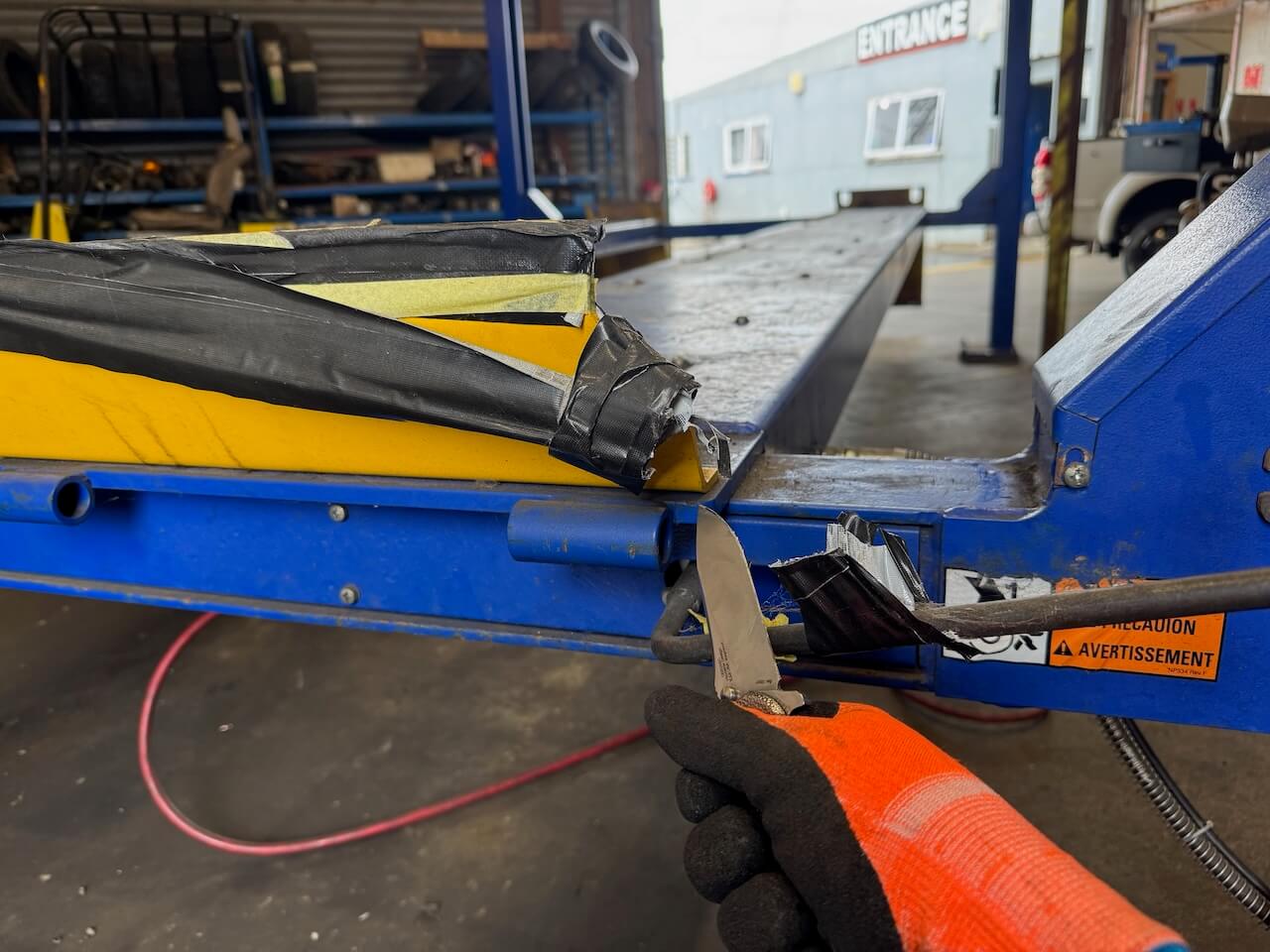
Our technician found the safety locks on this WOF hoist overridden with duct tape. Time only was between the operator and his maker.
This concrete anchor was pulled out by hand! The installer had not fitted the anchors correctly.
The operator attempted to unload a disabled vehicle directly off a slide-back tow truck. While backing the truck into the bay, the truck deck struck the hoist post, damaging it and the foundation.
The installer did not reeve the lift cables correctly on this four post hoist, effectively knotting them around each other. The cables had to be replaced, along with a myriad other issues with this installation!
Fortunately the high pressure hydraulic hose on this heavy truck hoist was underground when it ruptured. The vehicle recovery and mess were significant.
These incorrectly fitted hydraulic seals burst, dropping the car onto the safety locks and making a phenomenal mess.
Our inspector spotted this structural crack in a two post hoist arm. Left to continue, this would have resulted in the collapse of the arm and the vehicle loaded at the time. This hoist was written off due to age and other cracks.
Electrical faults can be hard to spot – this one appears to have been roughly a single electron away from killing the operator.
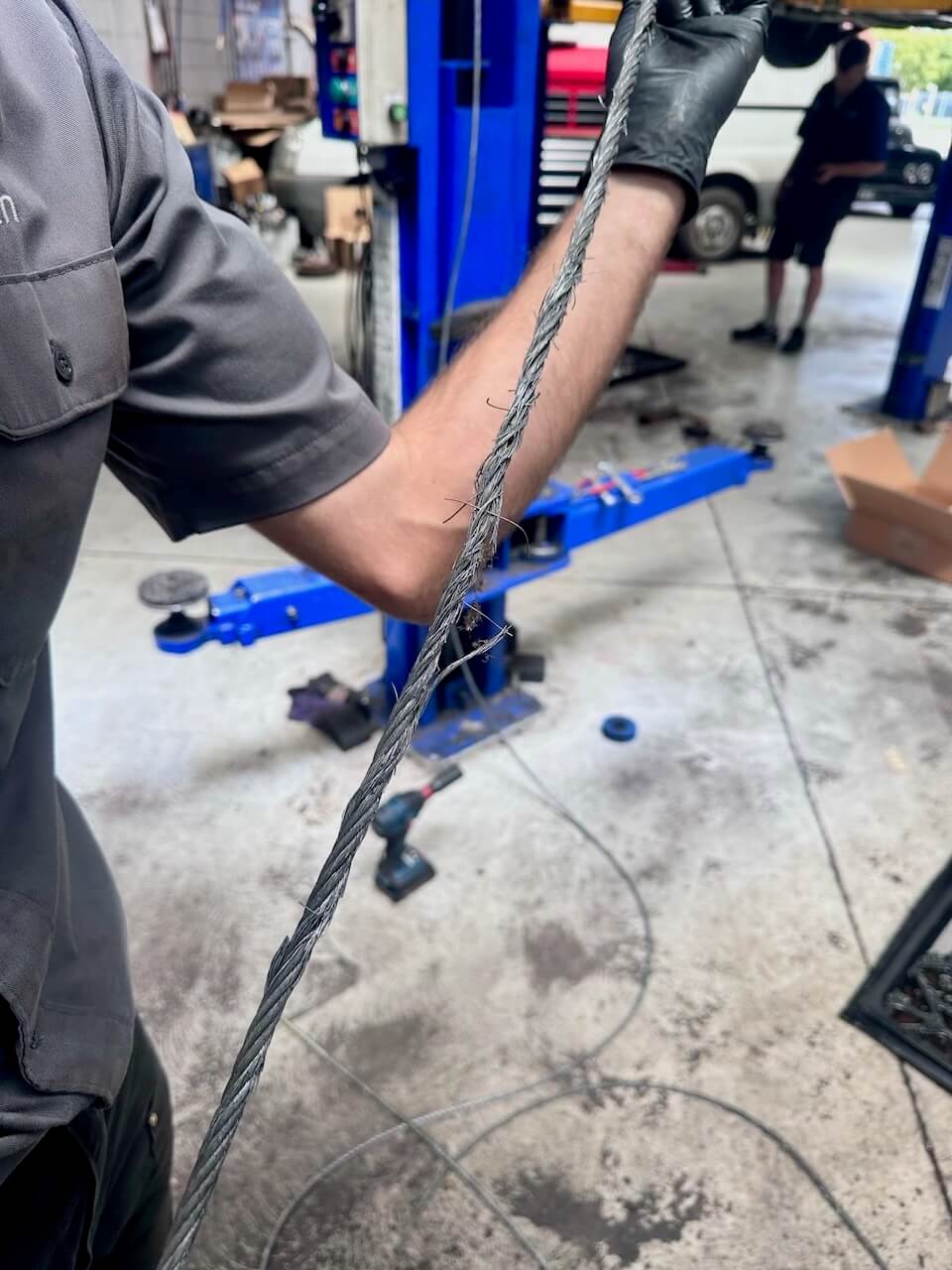
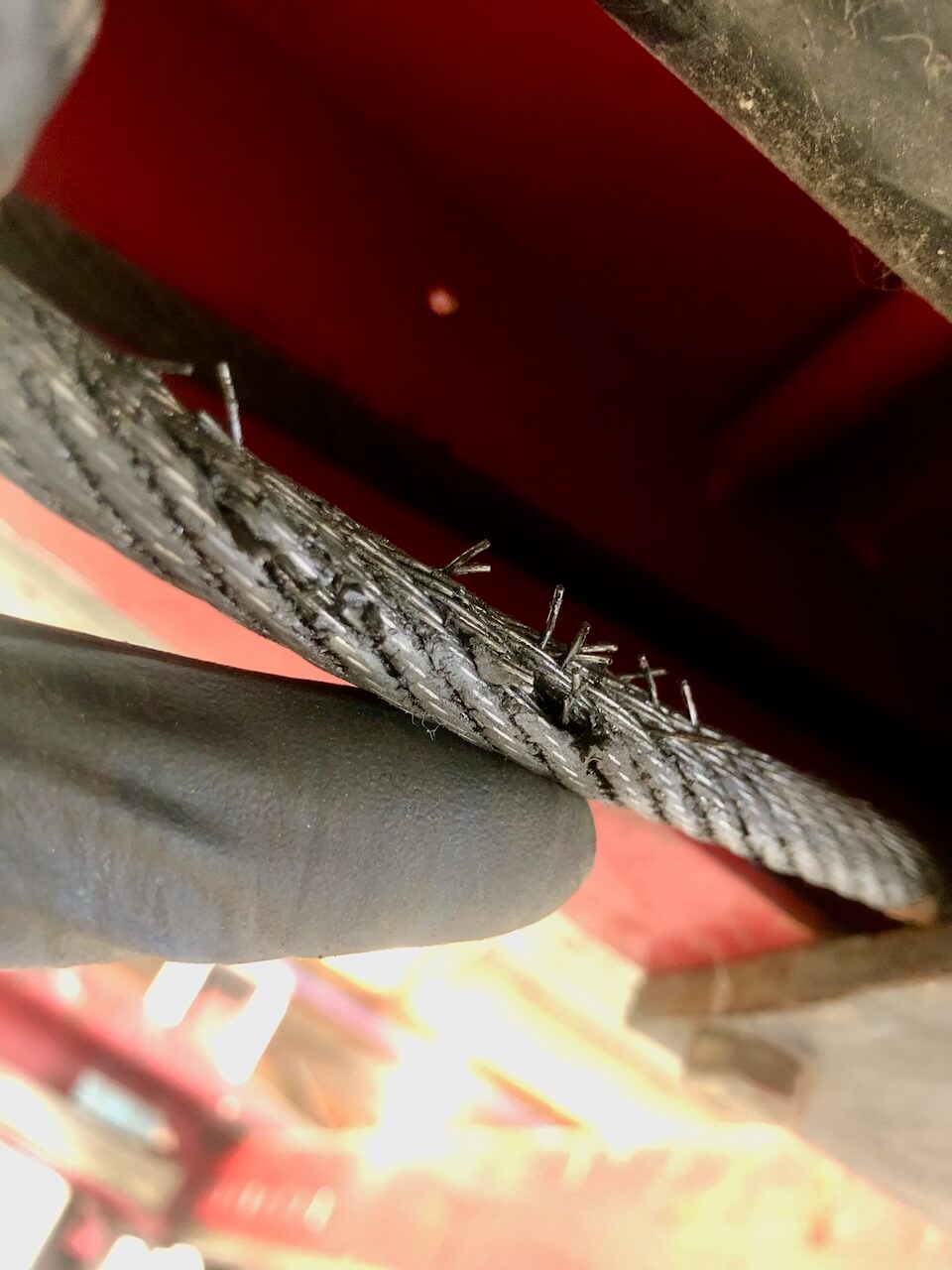
Don't let your hoist cables get this bad – this one worked apart in our technician's hand.
Security footage showed the operator of this hoist playing with his phone while the hoist went out of level due to a minor fault. He only noticed when the vehicle shifted – extremely close to sliding off entirely.
Displaced chain link on a two post hoist. Proper inspections should capture worn chains before link displacement or fracture.
A trailer was backed into this hoist, severely compromising the structure of one of the posts.
Column lift high-current DC cable fault. This might have made some interesting fireworks if it wasn't spotted in time.
A high-throughput WOF bay ignored recommendations to replace the lift cables in their four post hoists – until a cable broke, stranding a customer's vehicle. The safety mechanisms had been maintained though, and prevented worse problems.
This ultra-budget hoist can only lift ultra-budget loads over ultra-budget operators. The safety lock mechanism experienced catastrophic failure under 75% of the machine's rated capacity.
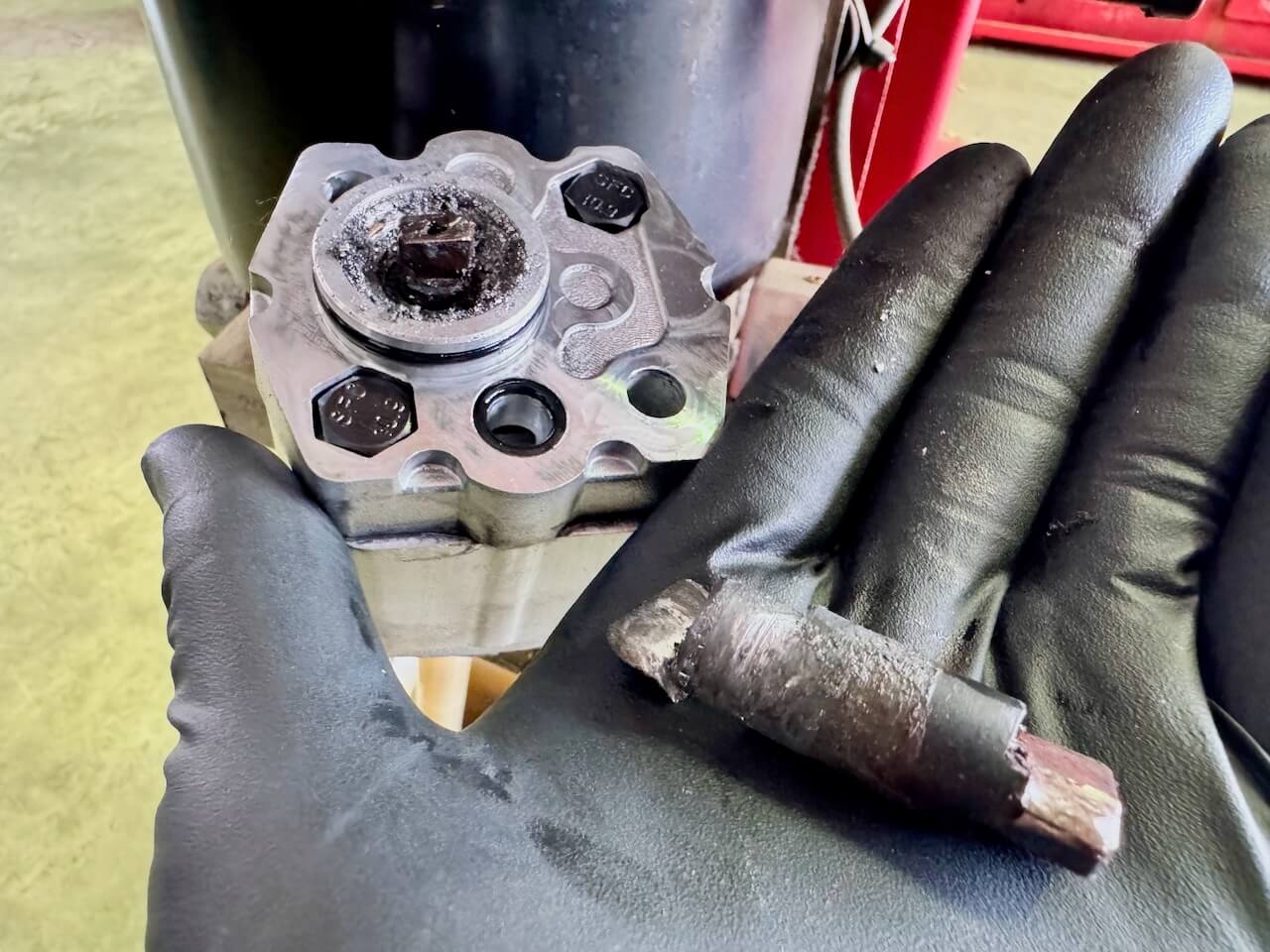
The drive shaft on this hoist fractured due to age and lack of service.
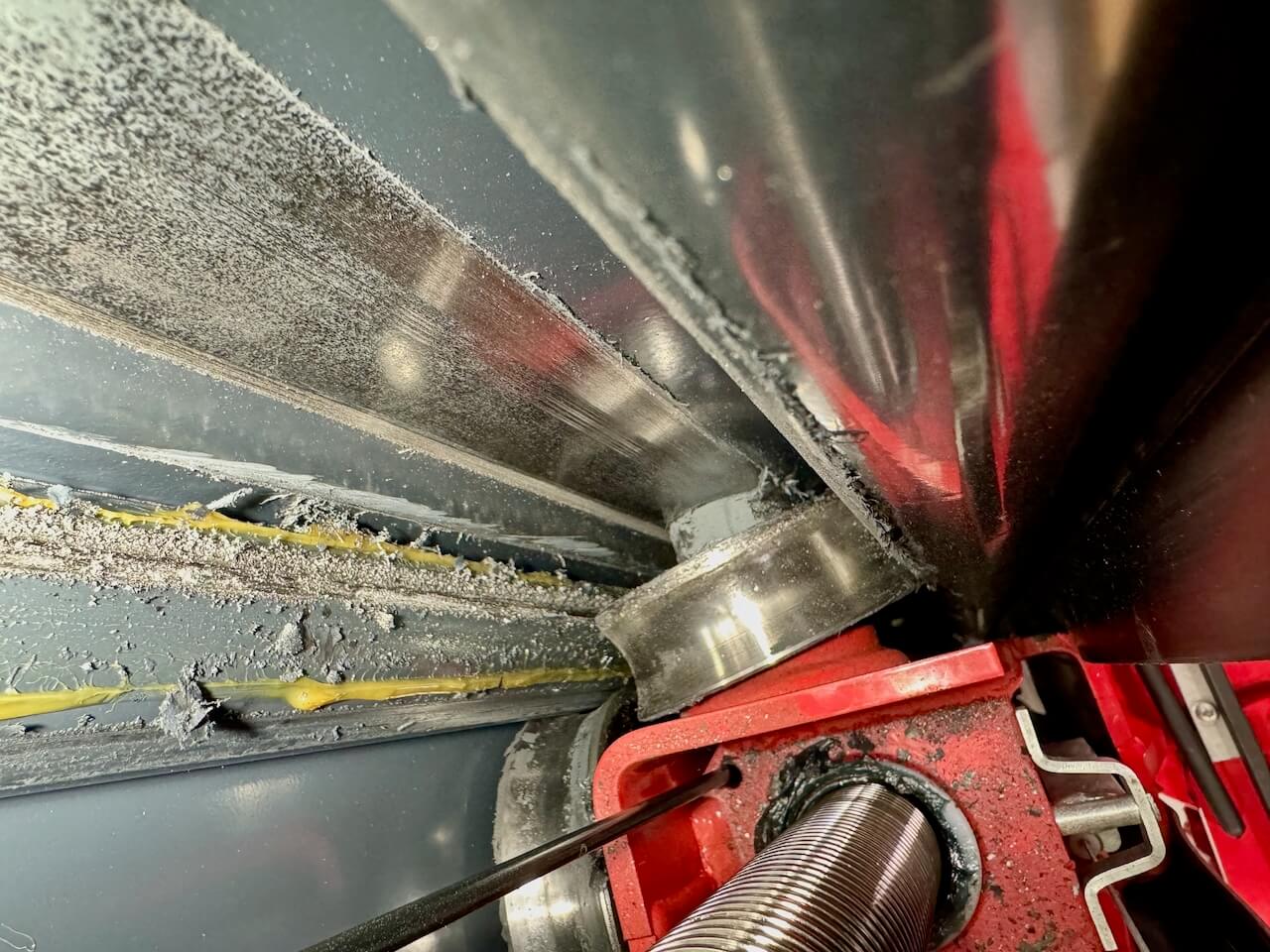
A poorly-installed four post hoist was 'making funny noises', which turned out to be the hydraulic ram and pulley smashing the safety lock mechanism due to extremely poor installation and setup. Delightful.
This high quality two post hoist was being incorrectly loaded by the operator, which caused this catastrophic carriage guide roller failure. The hoist was written off.
The installers of this hoist failed to set up its safety lock ladders properly, which caused major damage a few months later.
Buying cheap, low quality equipment does not pay. Ever. This insulation was falling off the wires in this 415 Volt hoist.
The installer of this heavy bus hoist damaged the main wiring loom, and taped it up with a 'she'll be right' attitude. It came back to bite a year later, and we were called in to resolve months of problems and downtime due to electronic faults.
The anchor on this two post hoist did not achieve maintenance torque during inspection, and withdrew completely. The installer had not drilled or fitted the anchor correctly.
An inattentive operator let this hoist down on a pneumatic impact driver, causing significant structural damage to the main lower pivot and machine base.
The rotation of the deck on this tyre changer picked up the end of an incorrectly-stored tyre lever, and fractured one of the pneumatic rams under the deck.
Our tech had not even been asked to attend to this machine! While walking past he noticed that the lift cables were so worn they were not far from snapping entirely. Apparently only the grease was holding it all together!
Four post hoist models with yoke-style cable draw rams are prone to failure in the yoke loops. The rest of the cable tests out fine, but this one specific location receives significantly more wear.
This two post hoist has only a single hydraulic ram seal; no redundancy. The seal was poorly made and disintegrated, creating a large mess for the apprentice to clean up, and downtime to strip and reseal the ram with high quality seals.
Shorn lift nuts from a screw-type two post hoist. It's important to have your lift systems properly inspected to prevent this.
Someone had drilled into this machine to fit an accessory, and unwittingly struck the hoist cable with the drill bit. Over time the damage cascaded into a near-breakage of the cable.
Operator error. The mechanic piled wheelnuts on the carriage of his two post hoist, causing the arm restraint to become jammed and stop working. Functional auto-actuating arm restraints are critical for vehicle stability and safe lifting.
The descent solenoid on this cheap hoist was clearly wired by a cheap hoist manufacturer! The partial-short between the wires caused longstanding issues that other servicepeople could not figure out.
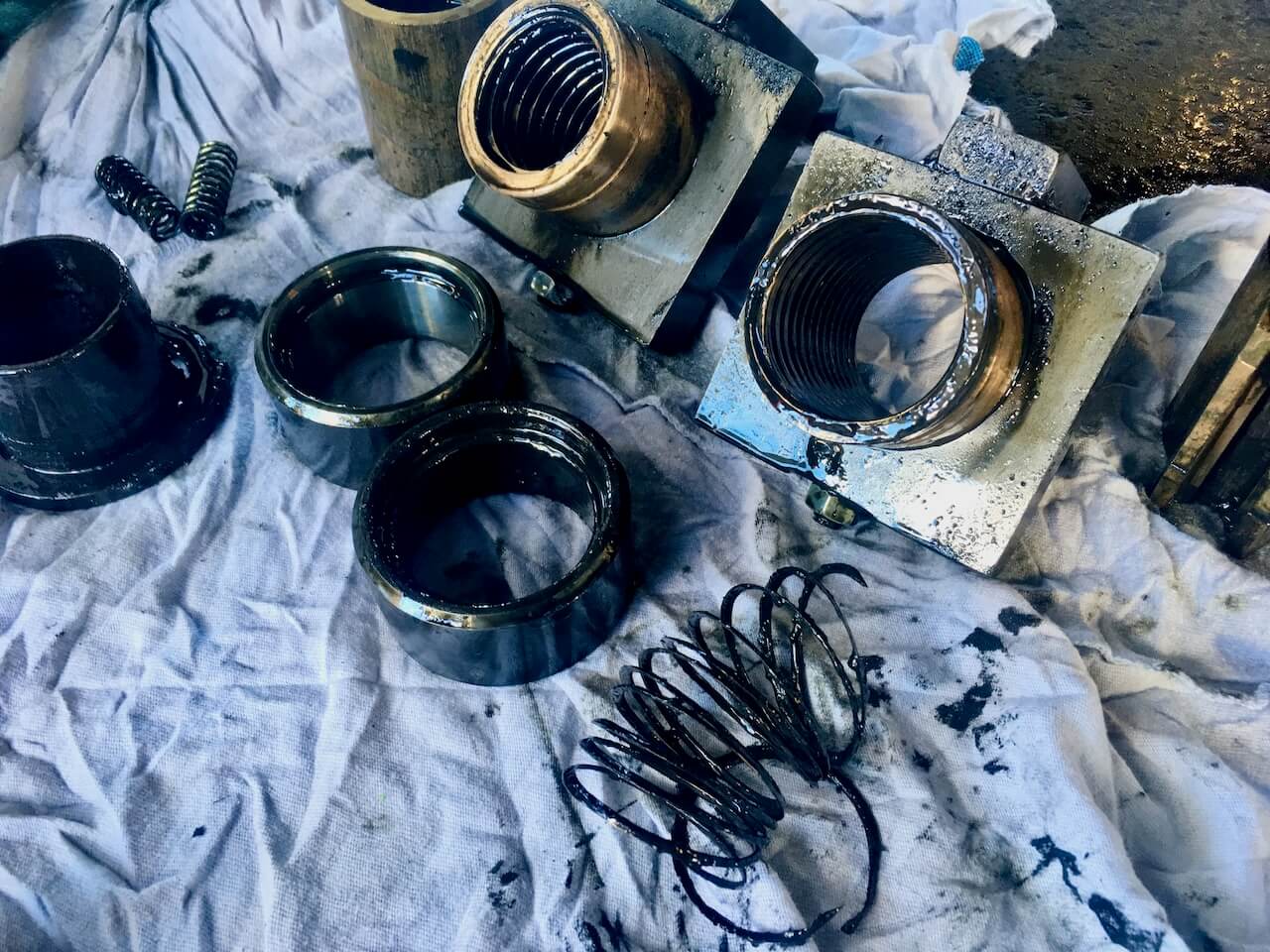
Don't buy a cheap hoist and cycle it hard! A combination of this mistake and a lack of proper greasing schedule led to complete collapse of the bushes on this four post hoist. All of the sheaves (pulleys), pins, bushes, cables, and other components had to be replaced.
Some manufacturers just don't think things through. The hydraulic ram on this two post hoist is long enough to strike the hose in certain situations – causing rupture of the hose and a nice oil shower. Luckily the safety locks did their job and prevented the vehicle from falling far.
Buy a cheap hoist they said. "She'll be right", they said. The reality is that the structure bends under normal usage, and replacing parts only gives the same problem shortly after. Back to the drawing board and specify a suitable quality machine for the job – plus the expense and hassle of removal and reinstallation.
The roof protection system on this two post hoist was faulty and allowed the roof of a van to strike the hoist structure, causing some decent damage.
A complete re-wire of the building led to this major failure – the electricians reconnected the three phase wiring with an incorrect rotation, causing all the hoists to go down instead of up... This was a very expensive mistake to repair.
A lazy operator insisted on driving ATVs over the locked arms of his two post hoist, eventually destroying the arm restraints.
This operator refused to service his wheel alignment hoist, and it came back to bite when a lift cable broke with a V8 supercar loaded...
This hoist was not inspected for years, and its lift chains were extremely worn, with links falling out. The chains were replaced at a modest cost by the new business owner, and safe operation began once again.
A manufacturing defect caused the safety valves in this hoist to become blocked, stranding a customer's vehicle and causing quite some consternation. We recovered the vehicle, diagnosed the problem, and cleaned out and repaired the valves.
Poor installation of this car hoist brought about significant wear in a place no wear should occur. This machine was fixed, but at high cost and painful downtime.
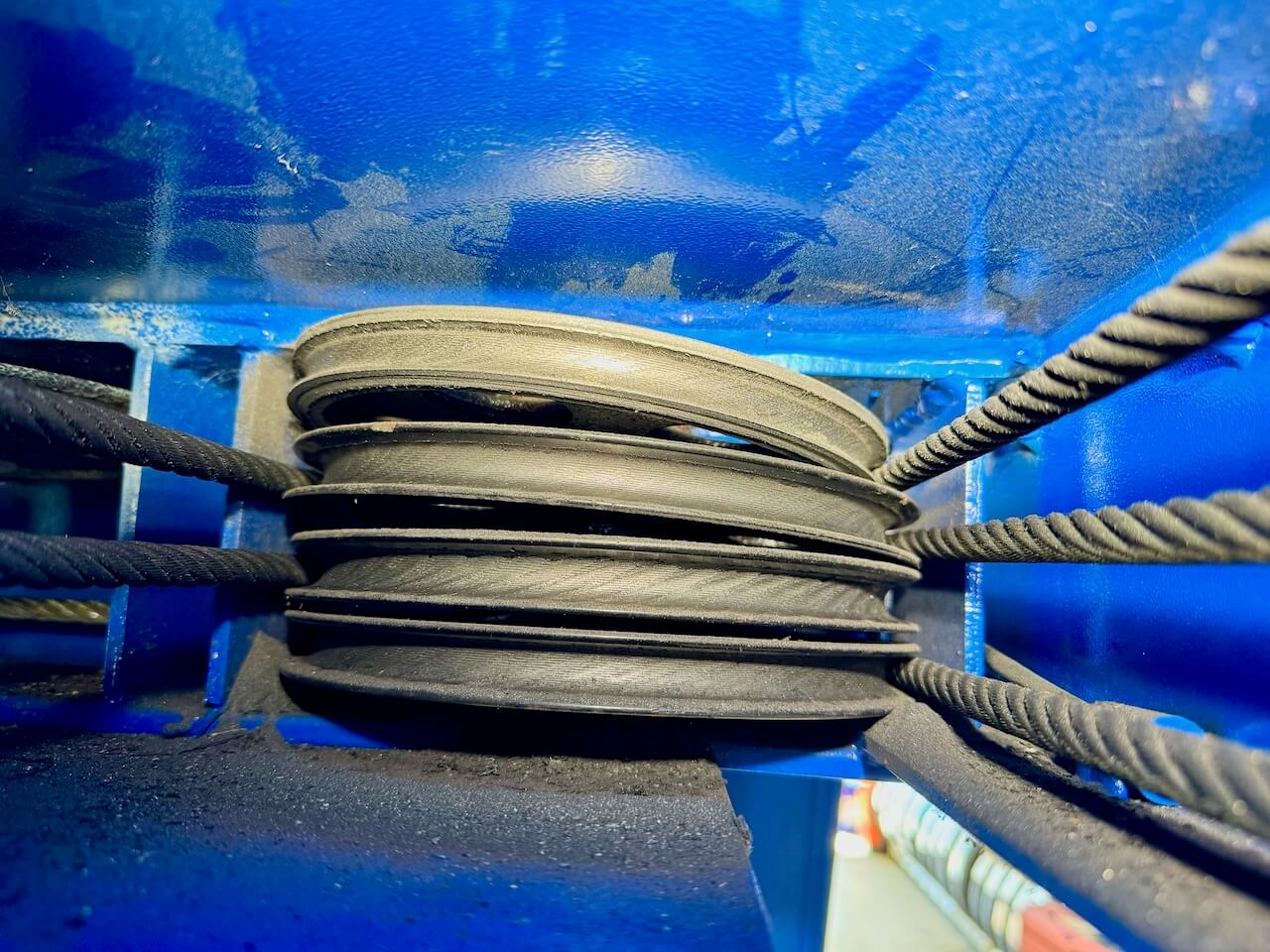
The owner of this machine knew there was a problem when metal filings began dropping out of his noisy four post hoist, but he continued using it until the pulleys were completely destroyed, taking many other working parts down with them.
This hoist was not recovered properly from a minor out-of level incident, and one of the lift cables jumped off a safety roller, wearing almost halfway through the shaft before we discovered it during a routine inspection.
An operator error caused significant damage to this wheel alignment scissor hoist, bending the safety locks and causing them to disengage under load.
A combination of factors led to the cable derailing on this four post wheel alignment hoist, causing massive damage to the machine and a near miss for the customer's vehicle.
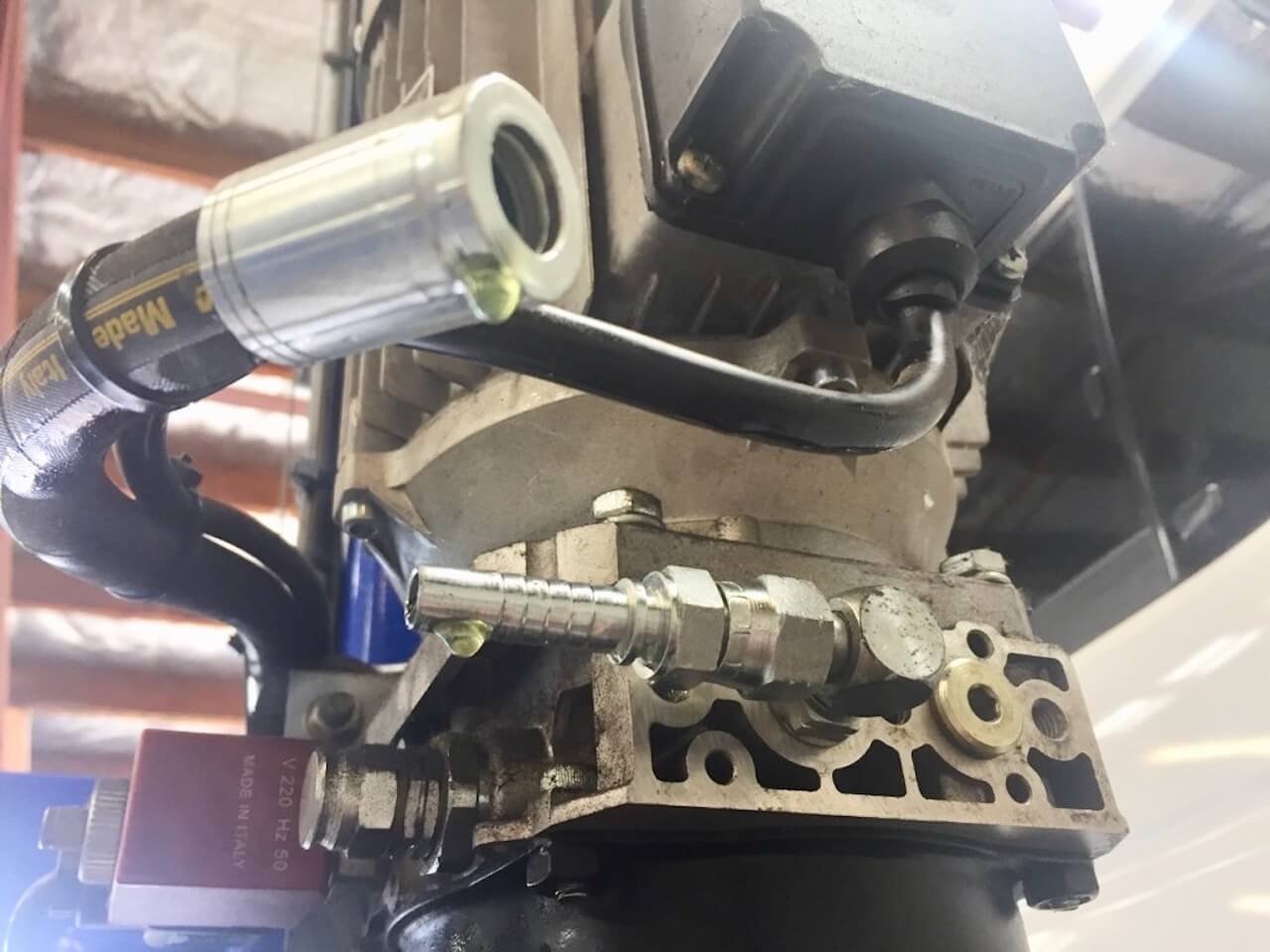
This is the last thing you want to see on your heavy truck hoist when it's supporting a 30-tonne truck above your head. Poor quality manufacturing and assembly on the hydraulic connections had led to a partially-stripped high-pressure connection. Not good.
Hard to spot faults like this are what we inspect for. These hydraulic pipes were quietly being subjected to dangerous wear.
An installation error on this two post hoist was silently developing two disasters at once – hydraulic and electrical!
Look carefully. The transmission jack is all that is holding up the right side platform on this hoist. The platform had no proper retainers, allowing it to come completely off the hoist during suspension work on the car.